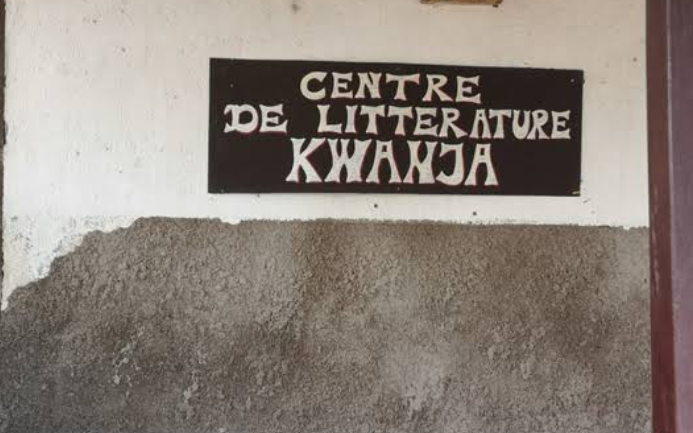
To express negation, many African languages employ negative markers whose functions vary according to the linguistic system. This study focuses on Kwanja, a Bantoid language spoken in Cameroon, and examines the mechanisms underlying the formation of negation within the framework of functionalism as developed by André Martinet (1979). The analysis reveals that Kwanja uses three negative markers—nyáŋ, bɨrí, and ka—each exhibiting distinct syntactic and grammatical properties. These markers do not occupy the same position within the sentence, and their distribution varies according to tense and mood. Among them, the marker ka is the most frequently used and displays a double-negation marking pattern, a feature also observed in several Bantu languages, as noted by Creissels (2006b). The findings further indicate that negation in Kwanja is primarily verb-centered, with verbal inflection playing a crucial role in its realization. This interaction between negation and verbal morphology gives rise to a dedicated negative morpheme that modifies the morphological structure of the verb. The study contributes to a deeper understanding of negation in Bantoid languages and highlights the close relationship between verbal morphology and the expression of negation in Kwanja.