
Articles & Updates

Digital Mediation of the Sacred: How Social Media Catalyzes the Reconfiguration of Religious Identity among Tunisian Youth
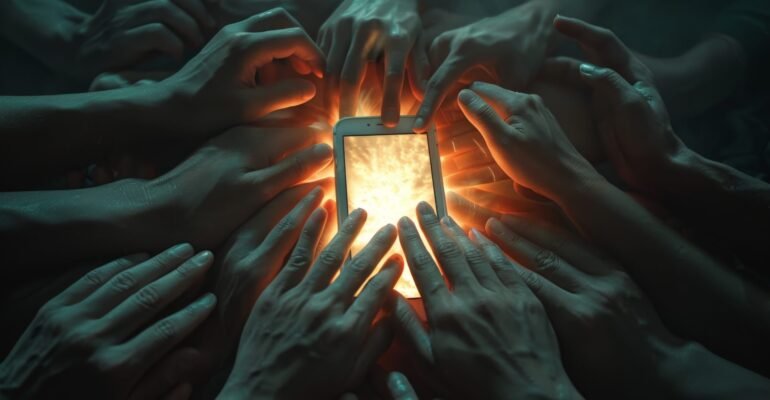
concept-person-suffering-from-cybersickness-technology-addiction
SociologyInnovation & Technology

Digital Mediation of the Sacred: How Social Media Catalyzes the Reconfiguration of Religious Identity among Tunisian Youth


Based on a doctoral dissertation, this article examines the influence of Web 2.0 on the construction of religious identity among young people in Tunisia by exploring the mechanisms through which the Internet and social media shape their religious perceptions, practices, and behaviors. The study adopts a mixedmethods approach inspired by Grounded Theory, combining a questionnaire survey conducted with 238 participants from the La Manouba district and twelve in-depth interviews to investigate young people’s use of digital media and their religious representations. The findings reveal that while the Qur’an and the family remain the primary sources of religious information, the Internet has become a major source for young people. The study demonstrates that the Internet acts as a “catalyst” in the construction of religious identity: rather than creating this identity, it accelerates and intensifies pre-existing identity transformations by facilitating access to a wide range of religious content, fostering interactions within online communities, and reinforcing the appropriation of religious references. This dynamic provides a better understanding of the rapid evolution of religious attitudes and behaviors observed in post-revolutionary Tunisia, including certain processes of radicalization. The article makes an original theoretical contribution by conceptualizing the Internet as a catalyst for religious identity transformations rather than their direct cause. It also highlights the need for educational, religious, and social institutions to adapt their strategies in order to better understand, support, and prevent the emerging dynamics of religiosity in the digital age.

Leave your thought here

Your email address will not be published. Required fields are marked *

Categories