
Colonial Utopia and Mythic Inversion:A Durandian Interpretation of Marguerite Duras’s un Barrage Contre le Pacifique
31 December 2025 2026-01-11 17:17Colonial Utopia and Mythic Inversion:A Durandian Interpretation of Marguerite Duras’s un Barrage Contre le Pacifique
Colonial Utopia and Mythic Inversion:A Durandian Interpretation of Marguerite Duras’s un Barrage Contre le Pacifique

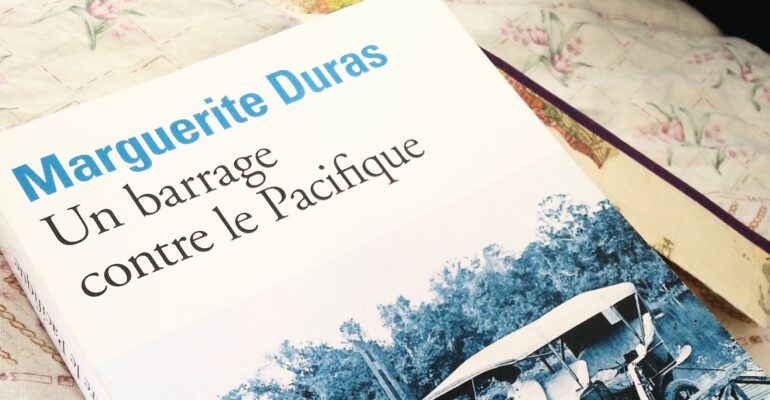
This study examines the mechanisms of mythic inversion in Marguerite Duras’s Un barrage contre le Pacifique (1950), demonstrating how the novel overturns the Edenic myth of French Indochina and reconfigures it as a destructive dystopia through three interrelated registers—topographical, anthropological, and axiological. Grounded in Durandian mythocriticism and drawing in particular on the concepts of the diurnal and nocturnal regimes of the image as well as mythic erosion, the analysis traces the progressive dismantling of colonial symbolic structures within the narrative. At the topographical level, the promised land becomes an uncultivable cadastral trap, where fragile seawalls collapse under the assaults of the Pacific and the slow devastation of devouring crabs. Anthropologically, the novel stages a process of psychic and corporeal disintegration: the mother, drained of her nurturing function, turns into a monstrous figure torn between obsessive accounting and violence, while Joseph and Suzanne embody a sacrificed generation consumed by sterile waiting. This movement reaches its axiological climax in M. Jo’s flawed diamond, an anti–philosopher’s stone whose illusory brilliance exposes the deep structural corruption of the colonial system. Together, these three forms of inversion shape the novel into a counter-myth of the French colonial imagination, revealing the symbolic processes that sustained collective belief in a utopian illusion.
Abdelilah Farhi
Related Posts
Search
Categories
Popular Tags